

Modular Booths vs Wood: 2026 Trends & B2B ROI Guide
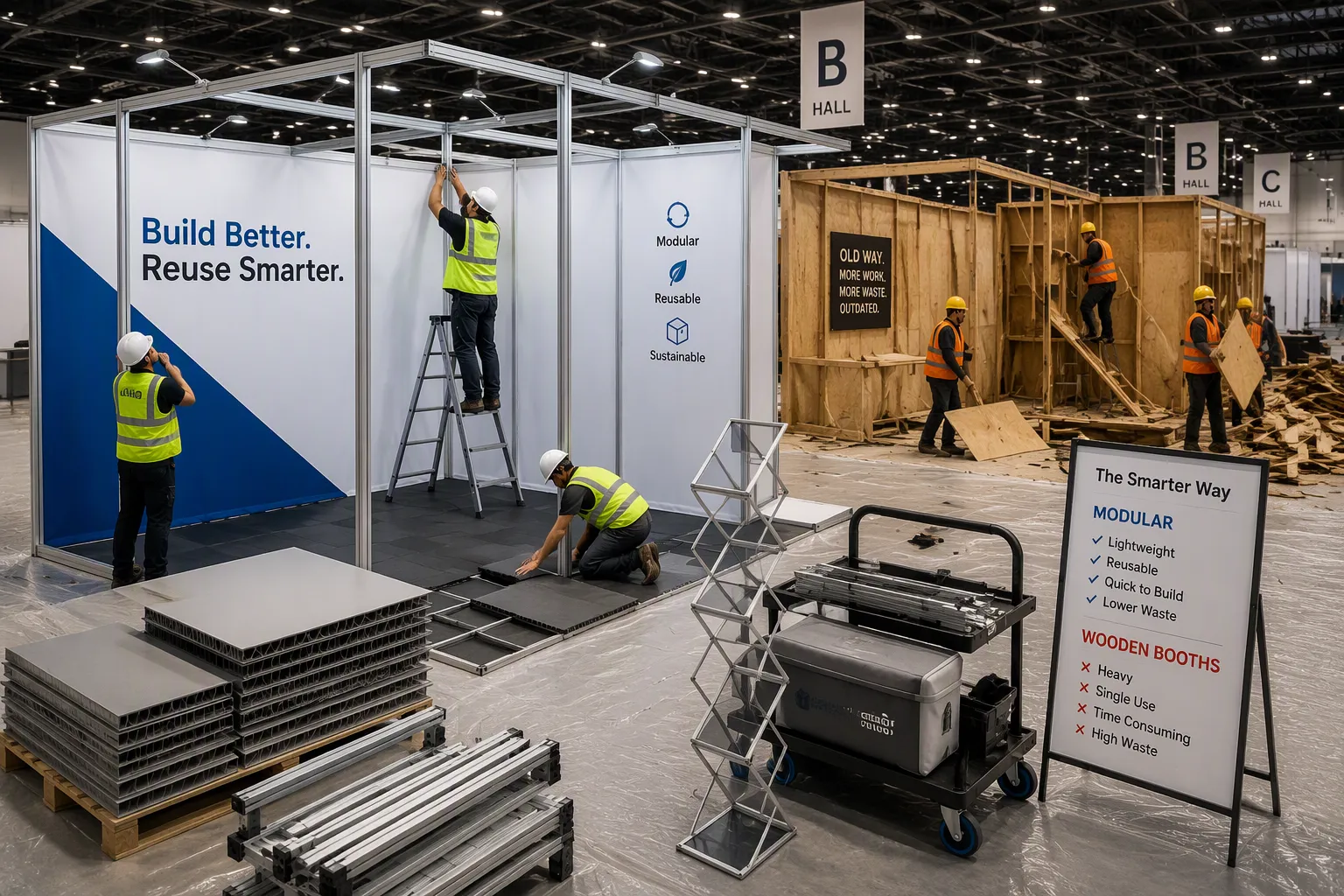
Walk any major 2026 trade show floor. Anodized aluminum frames and tension fabric graphics now dominate the aisles. Custom wood builds fade into the background. The shift is clear: the transition from custom carpentry to aluminum extrusions is redefining the industry.
This change reflects hard economics. Skilled millwork labor grows scarcer each season. Show timelines tighten. Corporate ESG targets demand measurable waste reduction. Industry data shows modular systems cut five-year ownership costs by 40–60% and weigh 40–60% less than wood-core alternatives. U.S. trade shows send up to 600,000 tons of waste to landfills annually.
Exhibitors who switch gain faster builds, lower drayage fees, and reusable assets. The reasons behind this shift deserve closer attention.
Key Takeaways
Modular booths save money. They cut shipping and labor costs by up to 75%.
Modular booths are easy to set up. Two people can build one in about 30 minutes without tools.
Modular booths help the environment. They are recyclable and produce less waste than wood booths.
Modular booths are flexible. You can change the design for different shows and reuse them for years.
Modular booths look great. They use fabric graphics and LED lights for a clean, modern appearance.
Why Traditional Woodwork Is Declining
Rising Labor Costs and Skill Shortages
Custom millwork depends on skilled carpenters, finishers, and installers. That labor pool shrinks every year. Fewer young workers enter the trade. Experienced craftsmen retire. The result: higher wages for the workers who remain. Build costs rise. Lead times stretch.
A custom wood booth also demands precise on-site assembly. Union labor rates at major venues add another layer of expense. A single missed detail can delay the entire build. Exhibitors absorb these costs directly. Traditional booth construction methods simply cannot compete on speed or predictability.
Waste, Weight, and Inflexibility
Wooden booths are heavy. A typical custom build ships in multiple crates weighing hundreds of pounds. One cited example: a 1,200-lb shipment. That weight drives up freight and drayage charges. Drayage is billed by weight and charged both ways—setup and teardown. A 1,200-lb shipment pays twice. Minimum charges often apply regardless of actual weight.
Attribute | Traditional Wooden Booth | Modular Aluminum Booth |
|---|---|---|
Weight | Hundreds of pounds across multiple crates (e.g., a 1,200-lb shipment cited) | 60–120 lbs for a typical 10x10 modular display; frames pack into 2–4 cases of 25–40 lbs each |
Shipping cost | Freight shipping $500–$3,000+ per show; can exceed $2,000–$5,000 depending on distance and booth size | Ground shipping averages $200–$500 per show |
Savings | — | Companies typically save 60–75% on logistics expenses vs. custom builds |
A traditional wood and laminate booth build can run hundreds of pounds across multiple crates. Lightweight aluminum modular frames shipped in compact wheeled cases weigh a fraction of that... Lighter kits mean a lower drayage charge, often one of the largest single-line savings.
After a single show, most wood structures go to landfill. They cannot be reused. This waste conflicts with tightening corporate ESG targets. Show organizers increasingly penalize disposable builds. The traditional “one-time-use” booth construction model now carries real financial and reputational risk.
2026 Trade Show Booth Trends: The Modular Shift
Reusable Systems Replacing Single-Use Builds
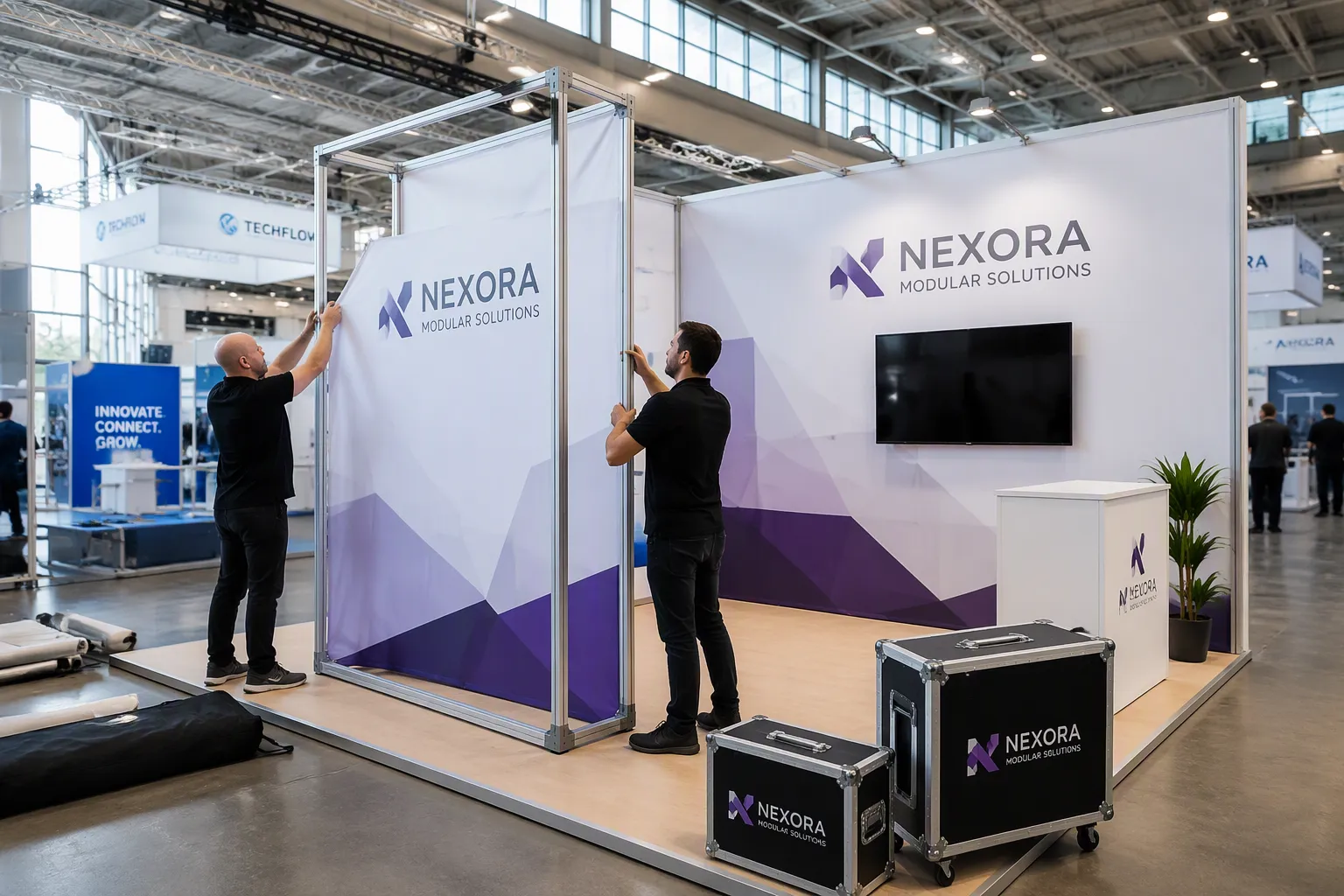
The global exhibition industry is projected to reach $45.5 billion in 2026. This growth puts pressure on exhibitors to build faster and spend smarter. Reusable aluminum frames, fabric graphics, and recycled lightweight materials now replace hard panels across major venues. The era of one-time-use plywood booths is ending. The rise of reusable modular exhibit systems has become the defining story of 2026 trade show booth trends.
A real-world example comes from recent major industry expos. Advanced modular systems demonstrate how aluminum frames and tension fabric combine into a complete booth that ships in compact cases. The system reproduces the look of a $50,000 custom booth while packing into a couple of shipping cases. This approach reduces drayage costs significantly. Exhibitors with three or more shows per year find that owning a modular kit delivers higher ROI than renting. Turnkey 10×10 rentals average $8,000–$13,000 per show. A reusable modular system pays for itself quickly under that math.
The business case extends beyond logistics. Attendee data shows 81% of trade show attendees hold purchasing authority. The average return per dollar spent at trade shows reaches $20.98. These figures support the argument for modular trade show design. Every dollar saved on construction and shipping can go toward lead generation and customer engagement.
Flexibility Over Size and Clean Design
Booth size no longer determines success. Flexibility now carries more weight. A single aluminum frame can reassemble as a backwall, L-shape, U-shape, or island configuration. Extra components scale the structure up for larger events. This modular flexibility lets exhibitors adapt to different venues without commissioning new builds.
Clean design wins with audiences. Fabric graphics produce smooth, seamless surfaces. LED backlighting adds depth and draws attention. These aesthetic improvements come from modular booth designs that prioritize visual impact over structural complexity. A cluttered wood build cannot match the crisp look of a well-designed fabric display.
Setup speed matters too. Components fit in an SUV. One or two people can assemble a booth in about 30 minutes without tools. This DIY capability reduces labor costs and eliminates dependence on skilled installers. Exhibitors avoid penalties for disorganized or early dismantling. The same frame system supports reusable booths across multiple events and seasons.
Sustainability strengthens the case further. Reusable aluminum systems can lower carbon emissions by up to 98% compared to traditional wood construction. Corporate ESG targets increasingly demand this level of environmental responsibility. Show organizers reward exhibitors who reduce landfill waste. The adoption of sustainable tension fabric displays aligns with both financial and environmental goals.
Trade show booth design in 2026 rewards adaptability. Modular systems deliver that adaptability without sacrificing appearance or performance. The shift toward modular construction is not a passing trend. It reflects a permanent change in how exhibitors approach booth design and event participation.
Inside Modular Trade Show Booths
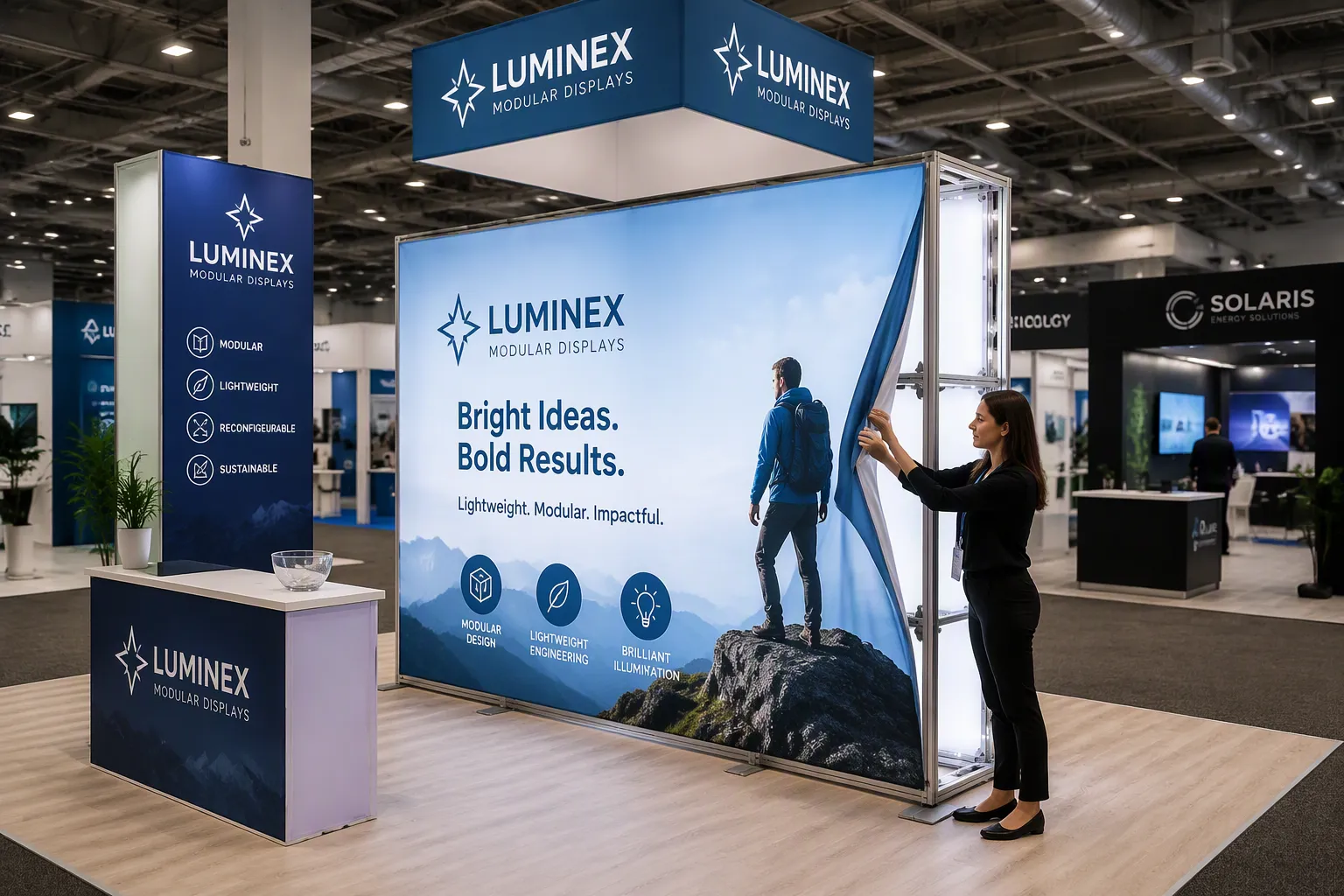
When sourcing modular systems, production depth matters. It explains why trade show booths today are engineered products rather than on-site carpentry. Industry leaders like Anew Display set the benchmark with 20 years of manufacturing expertise and a 5,000-square-meter production base. Here is what B2B buyers should look for in a premium SEG system:
Aluminum Frames, Tension Fabric, and SEG Light Boxes
A premium supplier's line-up covers the full exhibition floor. Light box booths, fast wall systems, and aluminum frame structures range from 3×3 portable displays to 20×20 island booths. SEG light boxes come in 40mm, 65mm, 80mm, and 120mm sizes. SEG cubes, illuminated counters, and picture frames extend the offering. Tension fabric systems include straight walls, 3D back walls, arches, banner stands, hanging banners, and pillar towers. A single partner can supply every structure. This breadth is modular exhibition design in practice.
SEG light boxes use Silicone Edge Graphics. Popular frames measure 3000×2000mm, 3000×2250mm, and 3000×2500mm. The graphic is slightly larger than the frame. It presses into a silicone channel for a flat, wrinkle-free finish. Standard models use OSRAM® LED beads, delivering up to 13,500 lumens with a 6500K–7000K color temperature. LED lifespan reaches 50,000 hours. The optical layout spreads light evenly and removes hot spots.
Certification keeps these systems export-ready. Products carry CE and RoHS approval. They also meet REACH and IEC requirements. Flame-retardant PVC meets UL94 V-0. Fire-rated fabric meets DIN 4102 Class B1. A six-step quality process, from material inspection to pre-shipment checks, protects consistency. Every illuminated display undergoes 100% LED inspection.
Anew builds these systems with B2B partners in mind. Frames accept dye-sublimation fabric. Graphics replace without removing the structure. This feature makes refresh cycles fast and affordable. The company supports OEM and ODM customization for structures, sizes, graphics, accessories, and configurations. Wholesalers can order small batches or project-based setups. Anew delivers to more than 8 countries and has supported over 75 global display projects. That record signals reliable lead times and strong after-sales service.
Tool-Free Assembly and Reconfigurable Layouts
Tool-free installation is core to modern modular trade show booths. No screwdrivers, drills, or specialized installers are needed. Lightweight aluminum frames click together by hand. This on-site tool-free assembly lets two people set up a booth in about 30 minutes. Traditional woodwork demands more labor, more time, and often union help.
A modular trade show booth also adapts to changing floor plans. The same frame forms a backwall, an L-shape, or an island. Components scale from 10×10 to 20×20. Sections connect at right angles or custom angles. The same inventory handles straight runs, corners, and curves. SEG graphics reprint when messaging changes. Reusable aluminum and fabric structure replaces single-use lumber. A wooden booth lasts one event; this system lasts years.
The weight difference drives the financial argument. A custom 10×20 wood booth often weighs 800–1,200 lbs. An aluminum booth equivalent weighs 250–450 lbs. At a drayage rate of $130 per hundredweight, the lighter build saves $1,430–$1,950 per show. The kit packs into labeled cases and stores flat between events. Hardware stays accounted for, so setup stays predictable. This aluminum booth is not only cheaper to ship; it also reconfigures without new drawings.
Booth design now prioritizes adaptability. Clean fabric surfaces and replaceable graphics outperform painted plywood. Trade show booth design decisions must consider future reuse, storage, and sustainability. That mindset is reshaping trade show booth design. Modular booth designs deliver these benefits. Modular custom booths give exhibitors a permanent asset instead of a one-time expense.
Cost and Sustainability Advantages
A booth's total cost exceeds its build price. Drayage, storage, installation, and disposal add up. Reusable modular systems reset the equation.
Reusability, Shipping, and Labor Savings
Drayage is billed by weight. At $1.23 per pound, a 400-pound wood-panel 8x8 booth costs $492. The equivalent light-frame aluminum structure weighs only 96 pounds and costs $118. That is a $374 saving per show, more than 75%. Repeated across shows, the saving compounds.
Storage savings follow. Industry reports indicate companies have cut more than $60,000 in annual storage costs with a custom modular exhibit strategy. Labor costs drop too. A wooden stand needs six to eight workers for two to three days. Reusable modular exhibit systems set up in under two hours with two people, often tool-free.
These reusable booths become assets rather than expenses. Rental operators keep modular custom booths in active inventory for years. Owned wood booths often last only two to four shows. Modular booths also scale with budget. They expand or shrink with the venue. One reusable booth can serve both.
Lower Carbon Footprint and Less Waste
Environmental figures reinforce the financial case. A single-use wood booth carries a carbon footprint of 500–700 kg CO2e. Production waste runs up to 70% less with aluminum frames. Transport emissions fall up to 60% with flat-pack design. At a 6x3m stand, wood weighs 1,200–1,500 kg versus 250–300 kg, about 80% lighter.
Waste diversion tells the clearest story. Wood booths are only 10–20% recyclable and send 800–1,200 kg to landfill. Aluminum frame systems achieve 90–100% recyclability and reach zero landfill when reused. LED lighting adds an 80% energy-efficiency gain with a 70,000-hour lifespan. A case study of a global tech company reported 60% faster setup and less waste.
Modular construction also aligns with corporate ESG targets and show rules. Graphics replace without touching the frame. The structure never faces a full rebuild. Fabric graphics cut shipping weight and recycle cleanly. Embodied impact per show drops with each reuse.
The B2B Advantage: Why Wholesalers, Printers, and Contractors Are Switching
While exhibitors benefit from lower costs, the real market momentum comes from B2B intermediaries. For exhibition wholesalers, digital printers, and booth contractors, lightweight trade show structures offer distinct operational advantages.
Profitability and Operational Efficiency
For Exhibition Equipment Wholesalers: Compact packaging means lower ocean freight costs and higher container utilization. Standardized aluminum profiles ensure batch-to-batch quality consistency, significantly reducing after-sales support costs.
For Digital Printing Companies: Tension fabric systems are engineered for flawless dye-sublimation. The precision silicone edge channels make sewing and installation foolproof, eliminating customer complaints about wrinkled graphics and reducing reprint waste.
For Booth Contractors: Bid on more projects with confidence. Modular kits allow you to reuse the same hardware inventory across multiple clients, slashing your capital expenditure and warehouse storage costs while increasing your profit margins per show.
Trade Show Booth Design Trends Shaping 2026
DIY Assembly and Self-Build Kits
Exhibitors increasingly prefer to build their own displays. Tool-free frames make this possible. A DIY aluminum booth ships in compact cases. One person can carry the parts. Two people can assemble a full structure in about 30 minutes. No drills. No specialized labor. This shift reflects broader trade show booth design trends toward self-reliance and cost control.
Self-build kits appeal to smaller brands and first-time exhibitors. Printing-friendly frames accept dye-sublimation fabric graphics. The same DIY aluminum booths reconfigure for different floor plans. A 10x10 backwall becomes an L-shape or island setup. These DIY aluminum booths reduce dependence on contractors. Setup penalties disappear. Dismantling happens on schedule. For teams managing multiple events, owning a reusable kit beats renting each time. This approach to booth design puts control back in the exhibitor's hands.
Integrated Technology and Improved Aesthetics
LED backlit graphics have become a must-have standard. They turn ordinary panels into luminous focal points. Video walls add movement and draw crowds. Touchscreens enable self-directed product exploration. These tools thrive in larger spaces like 10x20 or 20x20 booths. A 240 cm (7.9 ft) height kit mounts screens at eye level without overwhelming an inline space.
Next-generation modular booth designs embed digital screens inside LED lightboxes. Static fabric graphics merge with dynamic video content. LED panels offer adjustable color temperature. Warm tones suit wellness brands. Cool whites fit tech products. Smart sensors can track foot traffic and dwell time. Fabric graphics produce smooth, seamless surfaces. Clean layouts with short messages help visitors grasp the brand quickly. When comparing systems in 2026, consider acoustic privacy, accessibility, and long-term adaptability. These factors shape successful trade show booth design. A well-planned trade show booth design balances visual impact with practical function. The best trade show booth design trends prioritize both.
How Exhibitors Can Adopt Modular Systems
Auditing Your Current Booth Portfolio
A smart transition starts with a clear-eyed audit. Conduct a 10-point post-show inspection of connectors, graphic panels, and internal recoil mechanisms before storing or re-shipping. This tells you which existing assets can be reused, which need repair, and which should be retired. Favor professional-grade aluminum extrusions and high-tension fabric graphics. These materials survive repeated transport and accept new fabric skins.
Apply the 80/20 messaging model. Keep 80% evergreen brand content constant. Make 20% swappable through magnetic overlays, Velcro headers, or QR-code-linked landing pages. Design with safe zones and high-resolution vector artwork. Critical content stays visible when the same hardware reconfigures for different floor plans. Evaluate reusable systems on cost per show over a three-year period. Modular kits avoid recurring rental fees and expensive installation and dismantling labor.
Follow these steps to transition from custom wood builds to modular systems:
Adopt a modular architecture built on durable aluminum frames with interchangeable SEG graphics.
Invest in a core kit once, then refresh only the graphics as messaging changes.
Use Silicone Edge Graphics that tuck into recessed frame grooves for graphic-only updates.
Start with a 10x10 kit and add frames or connectors later to expand into 10x20 or island layouts.
Create a teardown checklist to verify LED connections, frame alignment, and locking mechanisms.
Ship in wheeled cases, roll fabric graphics on a tube, and store in a climate-controlled environment.
Keep a spare-parts kit with connectors, stabilizing feet, and power supplies on-site.
Consider renting first to validate a modular layout before committing to full ownership.
Choosing the Right Supplier and System
Supplier selection determines long-term success. Look for OEM and ODM customization, small-batch or project-based orders, global certifications, reliable lead times, and responsive after-sales service. Request ISO 9001 and CE documentation for venue compliance review. Confirm lead times and deadlines in writing. Require a detailed quotation that separates design, fabrication, graphics, packing, shipping, and installation costs.
Ask how missing panels, damaged graphics, and late venue access are handled. Confirm replacement-part policies, warranty coverage, and missing-part responsibilities in writing. Assign 30% weight to project execution. Request recent project photos, technical drawings, material specifications, assembly videos, or an independent inspection.
Anew Display offers a useful benchmark. The company delivers to more than 8 countries and has supported over 75 global display projects. That record signals reliable lead times and strong after-sales service. Their modular custom booth design approach supports scalable footprints from 10x10 to 20x20. This makes modular custom booths a practical investment for exhibitors planning multiple shows. A well-chosen modular system turns booth design into a repeatable, cost-effective process. The right partner makes booth design a strategic asset rather than a recurring expense.
Woodwork will not vanish overnight. 2026 marks the moment when lightweight trade show structures become the default for cost-conscious, sustainability-minded exhibitors. Industry analysts forecast modular trade show booths gaining momentum from tighter budgets, shorter installation windows, and rising sustainability expectations. Flexibility counts more than size. Reusable systems deliver value across many shows, booth sizes, and years, making the most sustainable booth the economical choice. The triple benefit—time, money, and environmental impact—reinforces this shift. Early adopters position themselves ahead.
Ready to Upgrade Your Exhibition Portfolio?
Don't just take our word for it. Partner with a manufacturer that understands your B2B needs and see the quality for yourself.
Request a B2B Partner Catalog & Free Material SamplesDiscover our latest OEM/ODM capabilities and get a custom ROI projection for your next project.
FAQ
Quick answers for exhibitors evaluating modular systems against traditional wood construction.
How much can exhibitors save by switching to modular booths?
Exhibitors typically reduce five-year ownership costs by 40–60%. Logistics expenses drop 60–75%. Aluminum frames weigh a fraction of wood builds. Drayage alone saves hundreds per show. A 400-pound wood booth costs $492 in drayage; a 96-pound aluminum equivalent costs $118.
How long does it take to assemble a modular booth?
Two people assemble most modular booths in about 30 minutes. Tool-free aluminum frames click together without drills. A wooden stand needs six to eight workers for two to three days. Modular systems set up in under two hours. Speedy teardown reduces labor fees and schedule penalties.
Can modular booths match the visual quality of custom woodwork?
Yes. Tension fabric creates smooth, seamless surfaces. LED backlit SEG graphics add depth and draw attention. Advanced modular systems reproduce the look of premium custom booths. Clean design outperforms cluttered plywood builds with modern audiences.
How sustainable are modular systems compared to wood?
Aluminum frames achieve 90–100% recyclability. Reused systems reach zero landfill. Wood booths are only 10–20% recyclable. Each stand sends 800–1,200 kg to landfill. Modular systems cut production waste up to 70% and transport emissions up to 60%.
What certifications should a modular supplier hold?
Choose suppliers with CE and RoHS certification for global shipment. REACH and IEC compliance matters in many markets. Flame-retardant PVC should meet UL94 V-0. Fire-rated fabric should meet DIN 4102 Class B1. Ask about the six-step quality process and 100% LED inspection.
Please Contact Us!
Recent News
1.What are the main points of booth design and construction in exhibition design?
2025-10-142.Leading the trend of the times, detailing the seven advantages of modern digital exhibition hall design
2025-10-143.How to highlight the focus of the exhibition?
2025-10-144.Why do enterprises have to be exhibition halls when they develop to a certain scale?
2025-10-145.How to better display the cultural charm of enterprises and brands in the exhibition hall design?
2025-10-14