

SEG vs Traditional Light Box: Key Differences & B2B Buying Guide
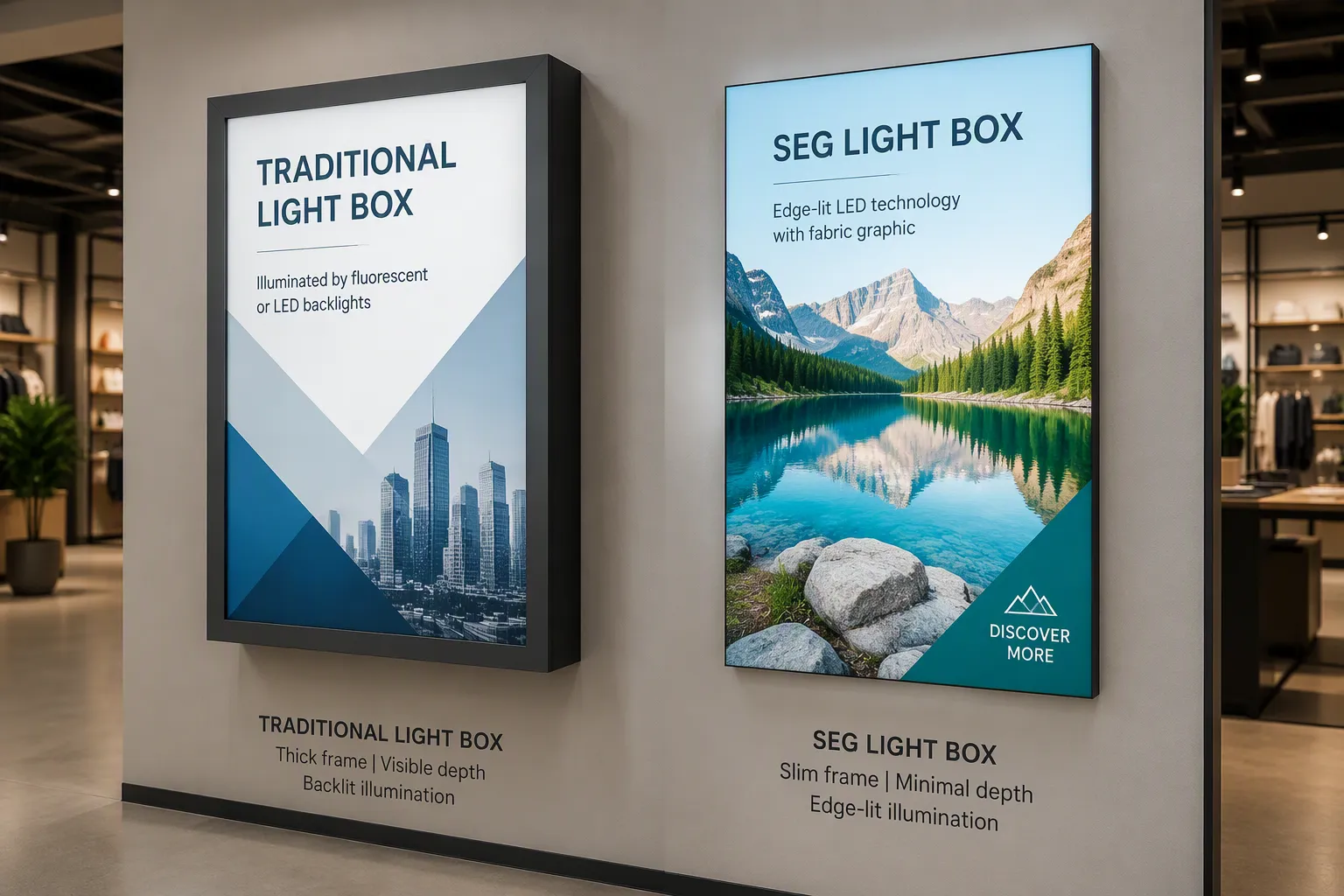
Imagine a retail manager preparing for a major product launch, faced with a critical choice between two illuminated display systems. On one side is the SEG (Silicone Edge Graphic) light box, featuring vibrant fabric stretched seamlessly over a sleek, frameless aluminum profile. On the other is the traditional snap frame light box, securing rigid acrylic or vinyl graphics behind visible metal borders.
While SEG displays offer a premium, gallery-like aesthetic and tool-free graphic swaps, they come with a higher initial investment. Traditional units, conversely, are budget-friendly and highly durable for long-term, static installations. Neither option is universally superior—the right choice depends entirely on your visual goals, update frequency, and budget. This comprehensive guide breaks down the key differences across four vital areas to help you select the perfect display solution for your brand's retail or trade show needs.
Key Takeaways
SEG light boxes offer a frameless, seamless look with edge-to-edge uniform lighting, making them ideal for premium brand displays.
SEG light boxes allow quick, tool-free graphic changes, perfect for frequent updates like seasonal promotions and trade shows.
Traditional snap frame light boxes cost less upfront and are highly durable for permanent installations with infrequent changes.
SEG light boxes reduce long-term costs through cheaper replacement graphics, lower shipping weights, and zero labor fees for swaps.
Choose SEG for flexibility, aesthetics, and sustainability; choose traditional for strict upfront budgets and ruggedness in static displays.
Defining the SEG Light Box and Traditional Light Box
What Is a SEG Light Box?
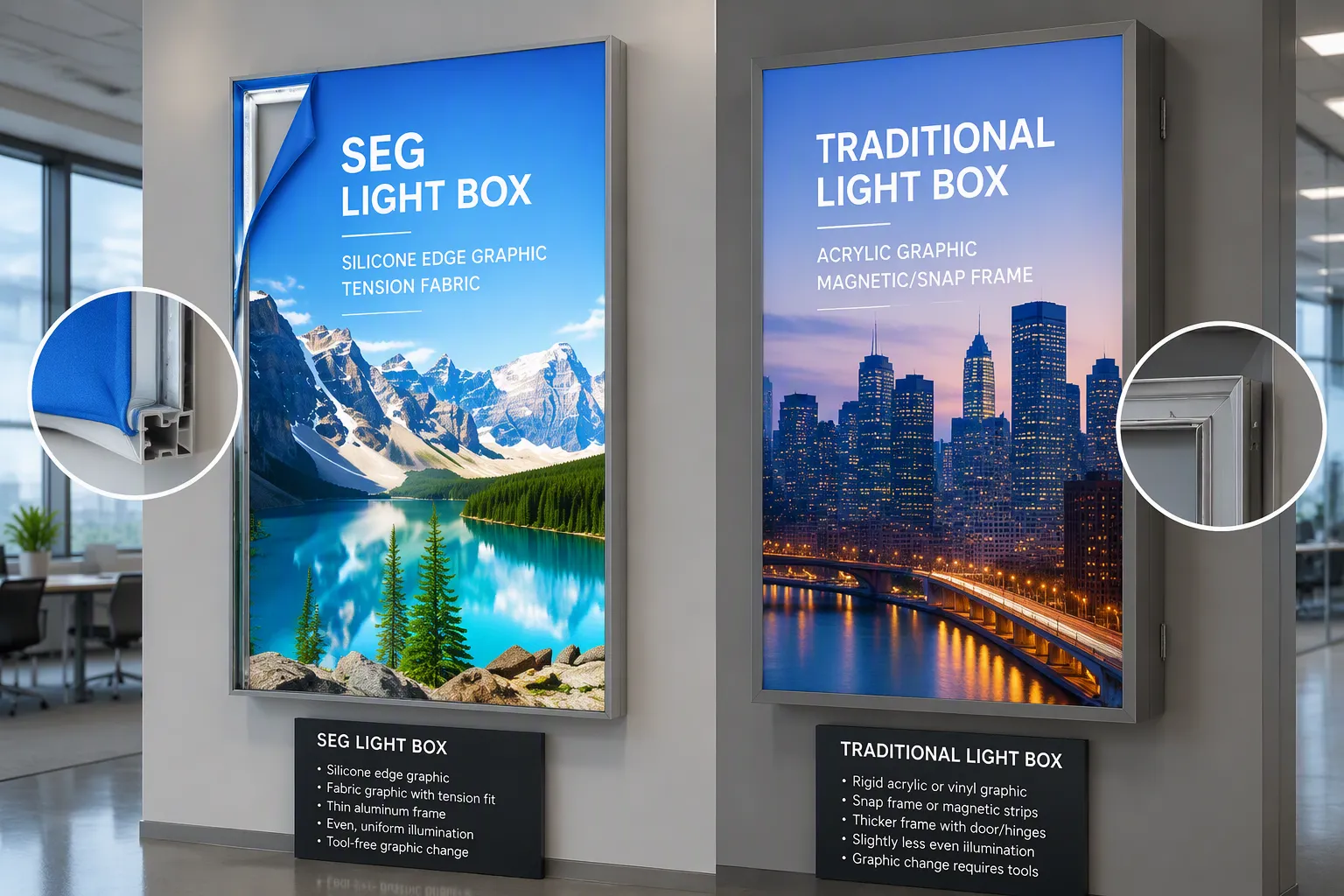
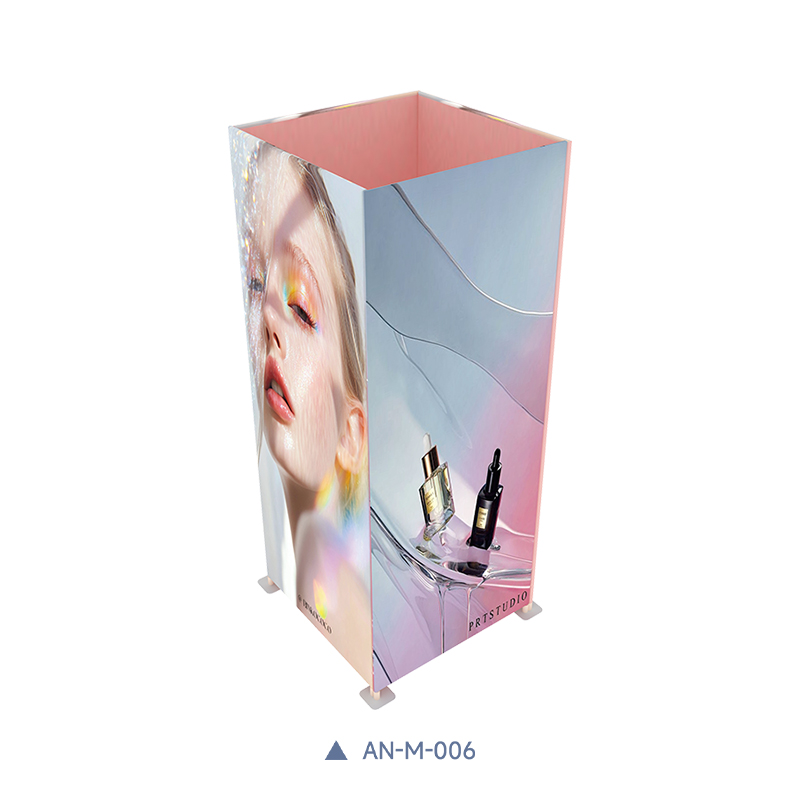
A custom SEG light box uses silicone edge graphics stretched across a lightweight aluminum tension frame. The silicone edge inserts directly into a precision-machined groove around the frame's perimeter. This special tension mechanism holds the fabric drum-tight, ensuring the resulting surface remains perfectly flat without wrinkles or sagging.
The graphics for a SEG light box are printed on high-quality, dye-sublimation tension fabric. This specialized fabric resists fading over time and delivers vibrant, high-resolution color reproduction. Backlit LED lighting provides uniform illumination across the entire graphic, eliminating the hot spots and dark areas common in lesser displays. This backlit SEG configuration supports intricate designs without distortion, resulting in a clean, professional appearance.
Installation of a SEG light box requires absolutely no tools. The user simply presses the silicone edge and the frame groove together by hand. Graphic changes take only minutes, and the tension of the silicone edge keeps the fabric consistently tight. Users who need to update graphics frequently choose Anew Display's SEG solutions for their unmatched convenience and long-lasting tension.
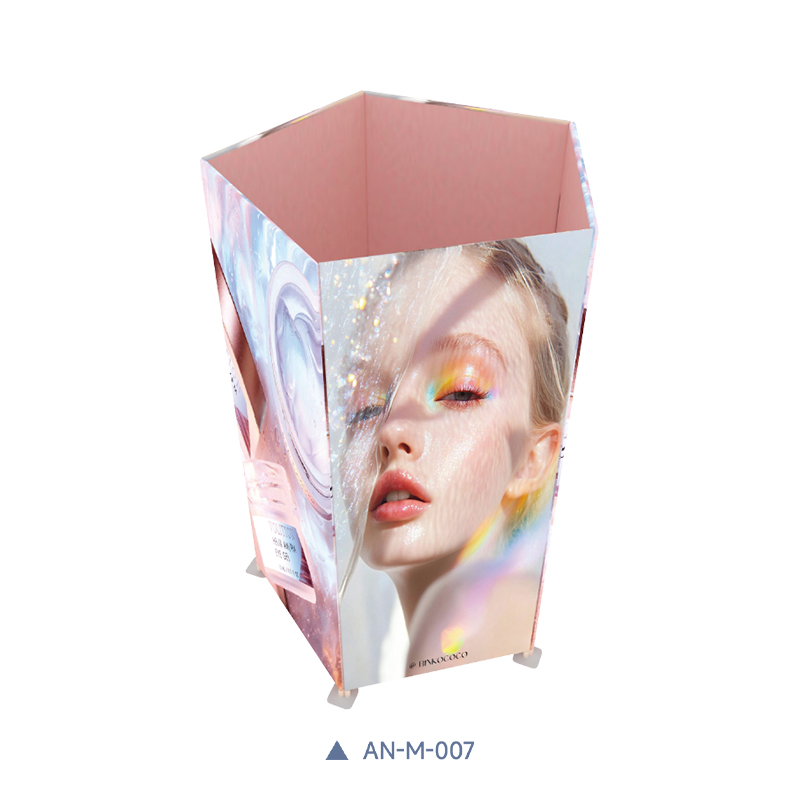
SEG displays offer several additional advantages. The modular tension frame allows for massive custom sizes and unique shapes. Fabric light boxes weigh significantly less than traditional rigid alternatives, making international transportation and on-site setup much easier.
What Is a Traditional Light Box?
A traditional light box utilizes a more conventional design. The rigid frame structure encloses solid graphics such as backlit vinyl, PET film, or acrylic panels. Snap frame light boxes secure the graphic with a hinged aluminum border that snaps shut, while magnetic frames use magnetic strips to hold the graphic in place.
These traditional light boxes cost less upfront. The construction is generally heavier but highly rugged, providing reliable service for permanent, long-term installations. Standard conventional light boxes use LED backlighting similar to SEG units. However, standard snap frames often produce less uniform illumination and show visible frame borders that interrupt the visual continuity of the graphic.
Graphic changes take longer with traditional units. The user must physically open the snap frame, use a suction cup to remove acrylic covers, or carefully lift magnetic strips. Some traditional models even require double-sided tape or adhesive for graphic attachment, adding time, effort, and potential damage to each update.
While fabric light boxes based on SEG technology now offer a superior alternative for dynamic environments, the traditional option remains suitable for static displays with infrequent updates, providing rugged durability at a lower initial hardware cost.
Visual Appeal of SEG Fabric Light Boxes
Seamless Frameless Finish
A premium SEG light box presents graphics without any visible border. The SEG fabric stretches across the frame and inserts into a hidden groove, meaning all hardware is completely concealed behind the graphic. Viewers see only the printed image, edge to edge. The frameless appearance creates a sleek, modern look that mimics high-end boutique aesthetics, immediately raising perceived brand value.
The frameless design drastically reduces visual clutter in retail spaces. The graphics feel integrated directly into the store architecture rather than sitting inside a bulky plastic box. A backlit SEG light box draws the eye toward the brand message, allowing the fixture itself to fade into the background. This gallery-like presentation supports stronger in-store brand presence and significantly improves brand recall.
Glare and Uniform Illumination
Properly tensioned SEG fabric naturally eliminates wrinkles and minimizes glare. The flat, matte surface ensures even light diffusion. A backlit SEG light box uses advanced LED illumination behind the fabric, creating vibrant colors and eye-catching, high-contrast imagery that cuts through high-ambient retail lighting.
The illumination quality clearly separates SEG fabric light boxes from standard acrylic light boxes. Conventional light boxes often suffer from "hot spots" near the LEDs or dark corners due to basic diffusion sheets. In contrast, a high-quality SEG light box maintains smooth brightness uniformity from edge to edge. By eliminating visible frame borders and uneven lighting, fabric light boxes deliver a significantly superior visual impact, creating a cleaner and more immersive retail environment.
Changing Graphics: SEG Light Box vs Snap Frame
Quick Graphic Swaps With SEG
Changing a graphic on a tension fabric light box requires no tools and zero training. The old graphic features a small pull-tab at the corner. The installer simply pulls this tab to release the silicone edge from the frame groove. Once free, the new graphic is pressed directly into the groove by hand. No laces, velcro, or adhesives are needed.
This incredible speed gives modular SEG light boxes a clear operational advantage. A seasonal promotion or new product launch can be deployed on the same day the graphics arrive. The backlit SEG design keeps tension perfectly consistent, ensuring prints stay flat without sagging. Furthermore, SEG displays do not require an expensive installation crew; a single staff member can complete the changeover in minutes.
The simplicity of the silicone edge system prevents wrinkles during installation and drastically reduces downtime and labor costs. For retail environments and trade shows that update signage multiple times a year, this system pays for itself in saved man-hours alone.
Traditional Snap Frame Graphic Changes
Snap frame light boxes require significantly more time and physical effort. The user must pry open the hinged aluminum borders on all four sides to access the graphic. Some larger models require screws to be removed first, or heavy acrylic panels to be lifted with suction cups.
Standard conventional light boxes share similar logistical issues. The rigid graphic material (like thick PET or acrylic) must align precisely within the frame; even a slight misalignment causes visible gaps or buckling. Because of the labor involved, traditional light boxes are generally only suited for permanent installations where updates are rare (e.g., once every few years).
Cost Comparison: SEG Light Box vs Traditional Light Box
Initial Investment and Hardware Costs
A SEG light box requires a higher upfront hardware cost. The aluminum frame requires precise CNC machining for the silicone edge groove, and premium components—such as CE/UL certified power supplies and long-lifespan LED chips (e.g., Samsung or Epistar) used by top manufacturers like Anew Display—add to the initial expense. Standard snap frame light boxes use simpler extrusions and basic LED modules, resulting in lower hardware costs. Despite the higher initial price, custom tension fabric displays deliver superior visual performance, guaranteed brightness uniformity, and long-term reliability that budget conventional displays simply cannot match.
Long‑Term Savings and Replacement Costs
Over time, SEG fabric light boxes drastically reduce the total cost of ownership, especially for global brands. Beyond cheaper fabric replacements and zero labor costs for tool-free swaps, the modular design slashes international shipping expenses. For brands sourcing from Anew Display, the foldable nature of SEG fabric and lightweight aluminum extrusions significantly reduces volumetric weight, cutting ocean freight costs by up to 40% compared to shipping bulky, rigid acrylic light boxes. Furthermore, the high-efficiency LEDs consume less power and require fewer replacements, providing both aesthetic and financial advantages over time.
Durability and Portability Compared
Build Quality and Weight Differences
High-quality SEG light boxes use heavy-duty aviation aluminum for the tension frame. This premium alloy keeps the total weight remarkably low while providing structural rigidity that prevents warping, even in massive 3-meter-wide formats. Traditional units use heavier steel or thick aluminum borders. While their rugged construction withstands rough handling, the extra weight significantly complicates transportation and increases shipping costs.
The SEG fabric attaches securely via the silicone edge, which prevents wrinkles and shifting during transit or use. Traditional frame structures rely on snap mechanisms or magnetic strips, which can fatigue, lose tension, or rust over time, especially in humid environments.
While rigid acrylic panels offer greater resistance to sharp punctures, modern woven polyester SEG fabrics are highly tear-resistant. For permanent, high-traffic corridor installations, traditional light boxes provide a hard protective shell. However, for portable trade show displays and traveling retail campaigns, SEG light boxes excel in unmatched portability.
Maintenance and Cleaning Tips
Cleaning a SEG light box requires gentle methods. Use a clean microfiber cloth with a mild, non-abrasive soap solution. Wipe the fabric lightly without scrubbing. Regular dusting keeps the material looking pristine. The LED modules behind the fabric are sealed and require zero maintenance.
Traditional light boxes with rigid surfaces like acrylic or glass can be wiped down with standard glass cleaners. However, they are prone to showing fingerprints and smudges much more visibly than matte SEG fabric. Additionally, traditional models often collect dust and insects inside the frame gaps over time, requiring full disassembly to clean properly.
When to Choose SEG or Traditional Light Boxes
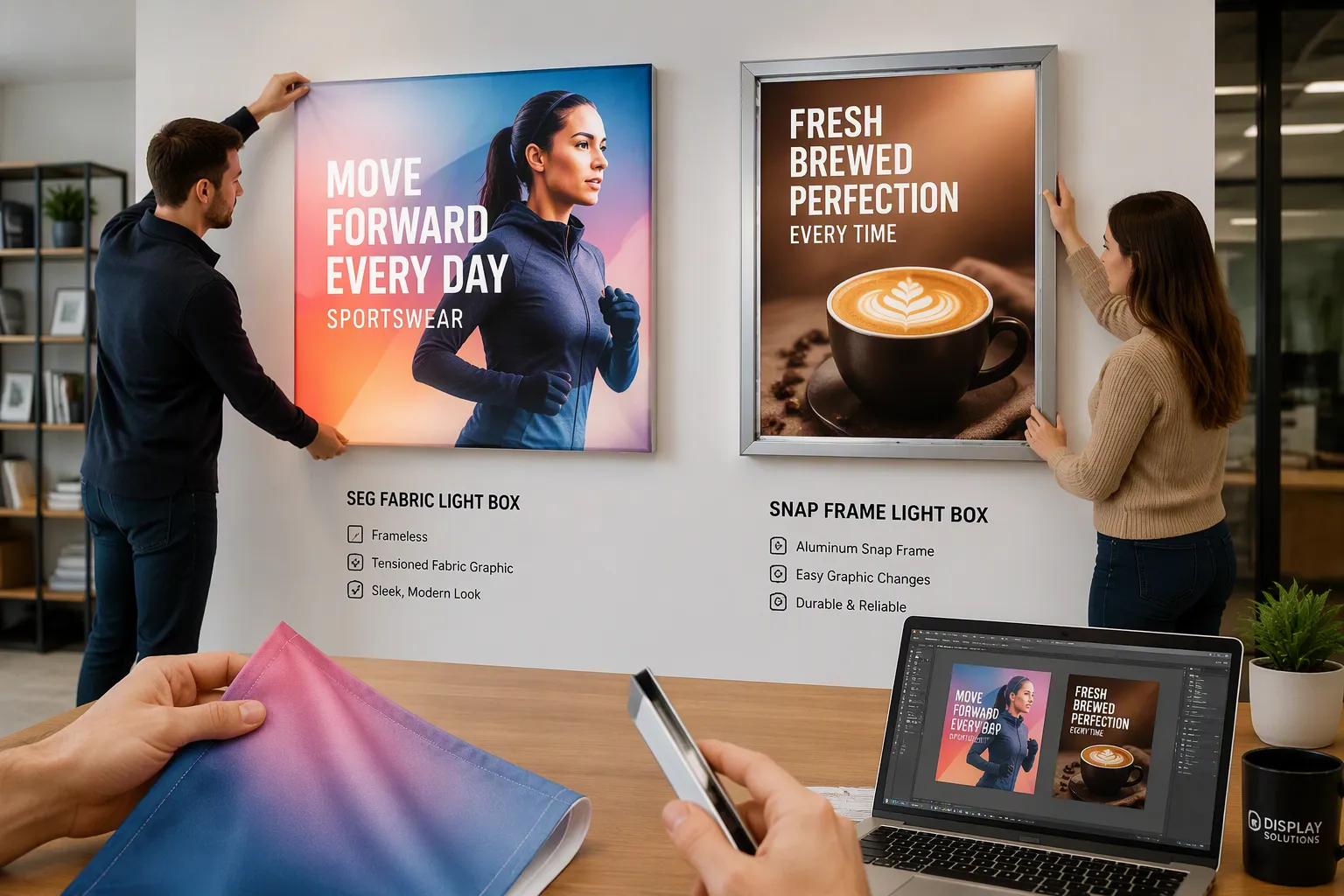
The right display system depends entirely on your operational roadmap. A SEG light box suits dynamic, fast-paced environments. A traditional light box fits static, permanent installations. Consider your update frequency, shipping logistics, and aesthetic goals before committing.
Key Advantages of SEG Fabric Light Boxes
Businesses that change graphics seasonally or travel to multiple trade shows gain the most from sustainable SEG fabric light boxes. The aluminum frame breaks down into compact extrusions, and the fabric rolls into a small tube. This modularity allows brands to reuse the expensive structural frame and lighting system across multiple markets and years, only shipping cheap, lightweight replacement graphics.
Furthermore, SEG displays align with modern sustainability goals. The woven polyester fabrics are recyclable and require less energy to manufacture and ship than heavy PVC or acrylic sheets. Combined with energy-saving LED technology, SEG displays help global brands meet their ESG (Environmental, Social, and Governance) initiatives while maintaining a premium market presence.
Key Advantages of Snap Frame Light Boxes
Snap frame light boxes serve a different set of priorities: low upfront capital expenditure and rigid impact resistance. Rigid acrylic graphics easily withstand bumps from shopping carts or luggage in busy transit hubs, making them ideal for permanent wayfinding signs or outdoor menus (when equipped with IP65 weatherproofing).
If your display will be mounted on a high wall where it will not be changed for five years, and budget is the primary constraint, a standard conventional light box is a pragmatic choice. However, if your brand relies on visual impact, frequent marketing campaigns, and global logistics, the limitations of snap frames quickly become apparent. Partnering with Anew Display ensures you receive expert OEM and ODM guidance to match the exact hardware to your market strategy.
A SEG light box delivers a flawless, frameless appearance and rapid, tool-free graphic updates that standard conventional light boxes simply cannot match. While traditional snap frame light boxes offer lower upfront costs and rugged durability for static, permanent installations, the long-term ROI, shipping savings, and premium aesthetics of SEG displays make them the superior choice for dynamic retail and trade show environments.
Ready to elevate your visual merchandising? Contact Anew Display's lighting experts today for a free consultation, or request a complimentary 3D mockup to see how custom SEG and traditional light box solutions can transform your brand's physical spaces. Align your display strategy with your operational goals and let Anew Display bring your vision to light.
FAQ
What does SEG stand for?
SEG stands for Silicone Edge Graphic. The silicone edge is sewn onto the perimeter of the fabric and inserts directly into a specialized frame groove. This tension mechanism holds the fabric tight and flat without wrinkles, eliminating the need for visible borders.
Can SEG light boxes be used outdoors?
Custom SEG light boxes are primarily designed for indoor retail, corporate, and trade show environments. While the fabrics are durable, traditional IP65-rated snap frame light boxes with weatherproof seals offer better protection against heavy rain and wind for permanent outdoor use.
Are SEG frames reusable for graphic updates?
Yes, absolutely. The aluminum frame and integrated LED lighting system are designed to last for years. Users only need to replace the lightweight fabric graphic, drastically reducing long-term costs and material waste for frequent campaign changes.
Which option provides simpler graphic installation?
SEG light boxes win by a wide margin. They require no tools, ladders, or specialized training. Users simply pull the old graphic out and press the new silicone edge into the groove in minutes. Traditional snap frames demand more physical effort, time, and often a second pair of hands.
Please Contact Us!
Recent News
1.OEM vs ODM: Which Model Fits Your Custom Light Box Business?
2026-09-182.How to Validate Trade Show Displays with Low-MOQ Orders
2026-09-163.Leading the trend of the times, detailing the seven advantages of modern digital exhibition hall design
2025-10-144.Why do enterprises have to be exhibition halls when they develop to a certain scale?
2025-10-14