


SEG Display TCO: Hidden Costs & 5-Year ROI Guide
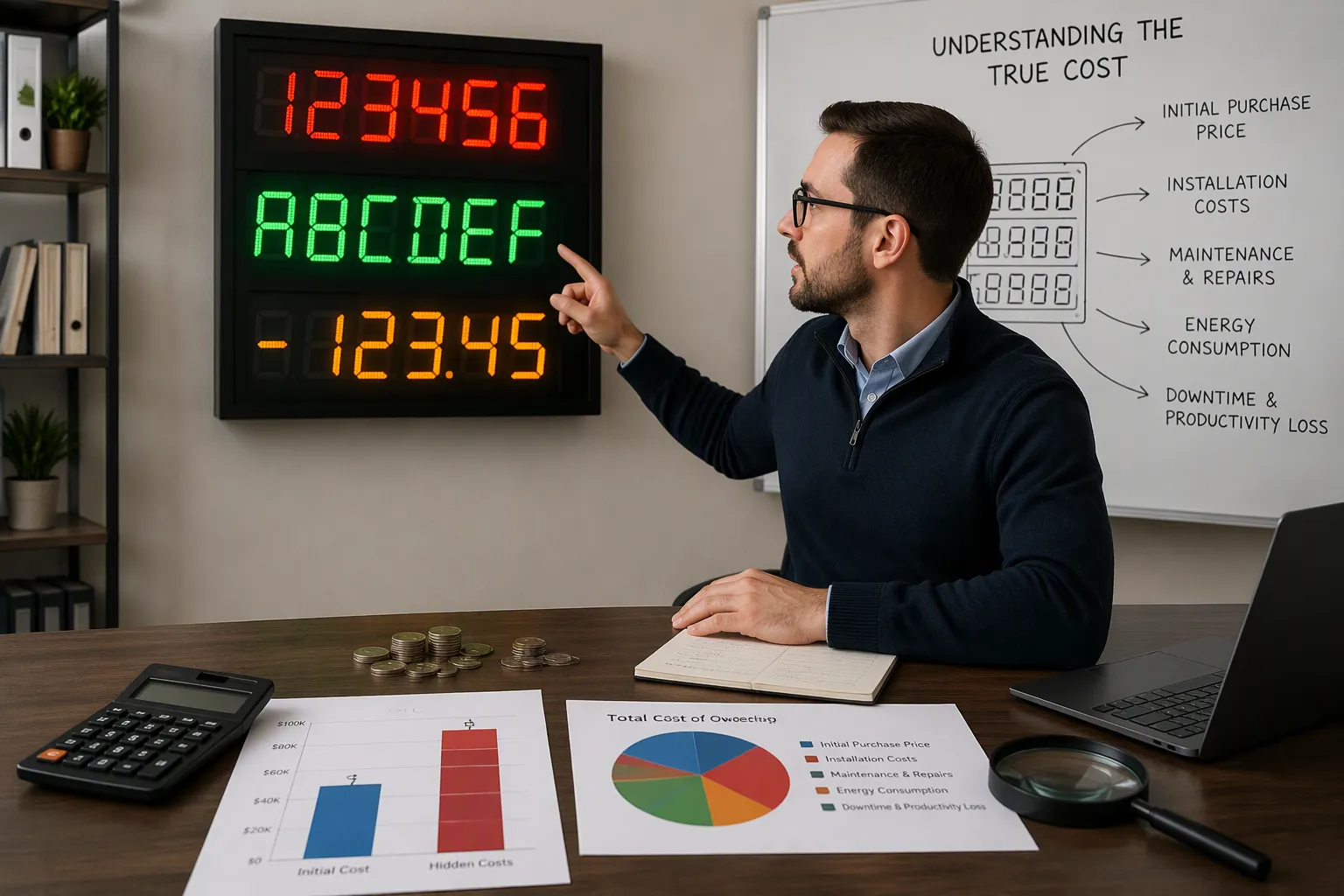
Direct Answer: Total Cost of Ownership (TCO) for SEG displays encompasses the initial hardware investment, shipping, drayage, union labor, energy consumption, graphic replacements, and end-of-life recycling over a 3-to-5-year lifespan. While the upfront hardware cost is 20–30% higher than traditional adhesive vinyl, SEG displays typically yield a 40% lower 5-year TCO due to modularity, tool-free assembly, and zero software licensing fees.
The purchase price is often the smallest part of the bill. Hidden costs can quietly exceed it. This post covers visible expenses, hidden costs, and how these displays compare with LCD, OLED, and traditional signage. Lifecycle math should drive the decision, not the initial quote. Buyers must look beyond the sticker price to see the full picture.
Key Takeaways
The purchase price is only a fraction of the total cost of SEG displays; logistics and labor dominate the budget.
Hidden costs like union labor, drayage (material handling), and energy consumption can make cheap displays expensive over time.
SEG displays often save money in the long run compared to LCD video walls and traditional custom-built booths.
Ask vendors for wattage data, I&D (Installation & Dismantle) time estimates, and flat-pack shipping dimensions.
A simple five-year cost model helps you see the full picture and make a smart, data-driven choice.
What Are the Visible Costs of SEG Displays?
The visible costs of SEG wall displays include hardware, shipping, and initial installation. The initial investment for an SEG system, including the aluminum frame and first fabric graphic, is generally higher than for traditional light boxes or adhesive vinyl. Anew Display's SEG Light Box & Modular Exhibition Booth System includes edge-lit frames and replaceable fabric graphics. Modular aluminum structures like the 40mm and 62 Fast Wall systems form the backbone of these displays. A clear picture of the total cost of ownership starts with these upfront figures.
Hardware, Installation, and Integration
Hardware represents the most visible expense. Edge-lit SEG frames and CNC-machined aluminum profiles constitute the primary material costs. However, installation often surprises first-time buyers. Installation and dismantle (I&D) costs for trade show booths typically range from $100 to $250 per hour in major US/European venues. In venues with strict union labor rules, these costs escalate further. Because Anew Display's SEG systems feature tool-free, click-and-lock assembly, I&D time is reduced by up to 60% compared to traditional wood or metal booths, drastically cutting union labor bills.
Shipping, Drayage, and SEG Wall Frame Setup
Shipping costs for SEG systems depend on weight and volumetric dimensions. More importantly, Drayage (material handling fees) at North American trade shows is calculated by weight and crate size. Traditional custom booths require heavy wooden crates, incurring massive drayage fees. SEG systems utilize compact, flat-pack modular packaging and lightweight aluminum, significantly reducing both freight and drayage costs. Setup of a SEG wall frame is highly efficient:
Connect aluminum extrusions using click-and-lock systems for tool-free, one-person assembly.
Install the fabric graphic by pressing the silicone edge into corners first to establish an even baseline.
Work toward the center of each rail to ensure drum-tight tension.
This method works for all silicone edge graphic frames and tension fabric displays. Changing one SEG graphic takes minutes. The simplicity of silicone edge graphics reduces long-term handling costs and allows quick updates for recurring events without paying for return shipping to the printer.
Which Hidden Costs Drive SEG Total Cost of Ownership?
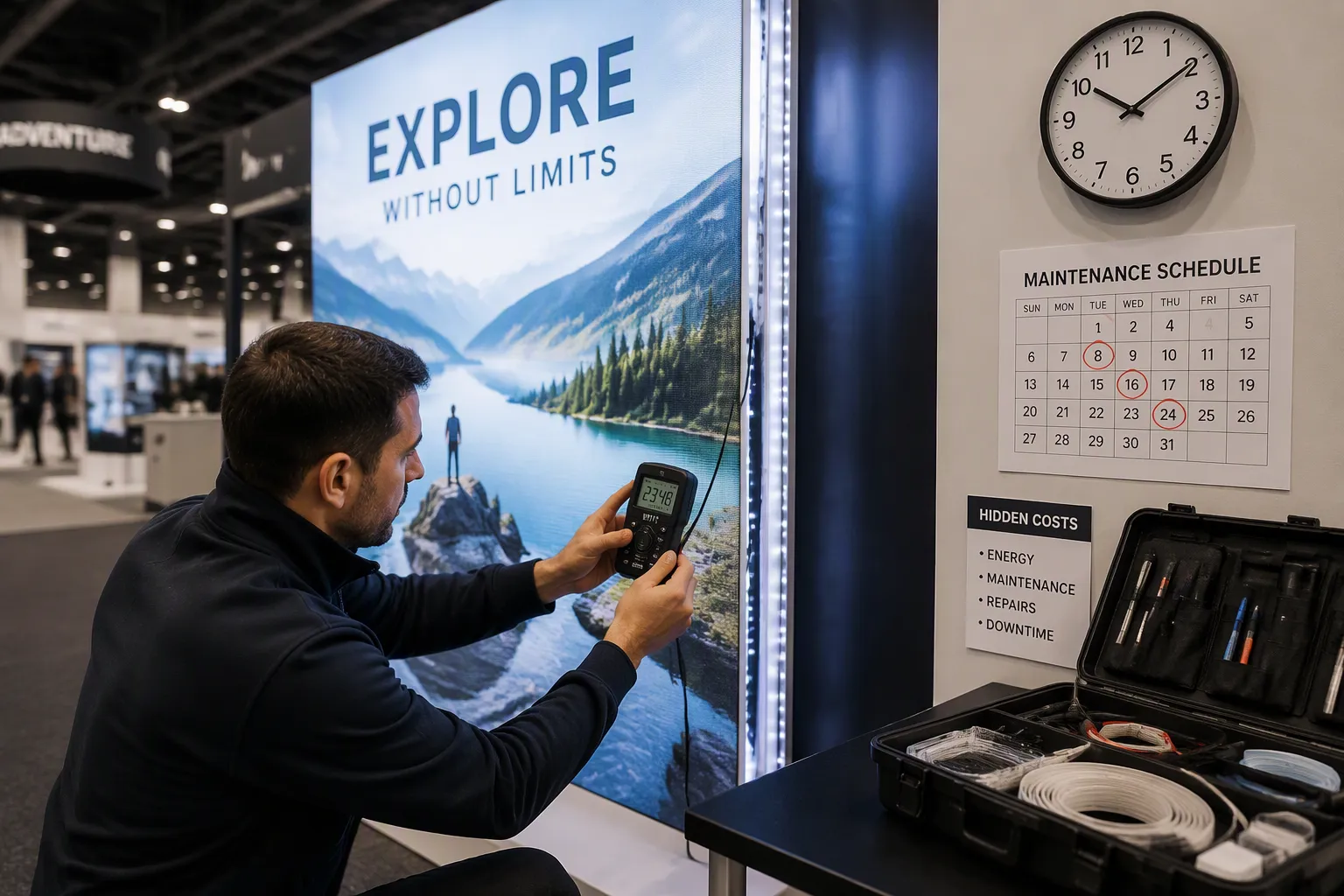
Hidden expenses accumulate quietly across a display's service life. Energy consumption, maintenance, repairs, and downtime all contribute to the total cost of ownership. Buyers who ignore these factors often pay far more than expected.
Energy, Maintenance, and Repair Frequency
Edge-lit LED frames draw power continuously during operation. Energy expenses depend on wattage, daily runtime, and local electricity prices. A frame running twelve hours per day for a five-day trade show consumes far more power than one used for occasional retail promotions. Buyers should request wattage data before purchase to estimate annual energy costs accurately. Anew Display utilizes high-efficiency, low-light-decay LED chips that maintain brightness while minimizing power draw.
Maintenance cadence affects storage and maintenance costs significantly. Fabric graphics require periodic cleaning and eventual replacement. LED strips may dim over time and need replacement. Frame components can loosen after repeated assembly cycles. Poorly assembled frames fail more often, generating recurring logistical fees for replacement parts. High union labor rates in major venues amplify every repair trip.
Anew Display addresses these risks through a strict six-step quality control process. Material inspection verifies component integrity. Profile processing ensures aluminum extrusions meet aerospace-grade tolerances. LED testing covers 100% of illuminated products. Pre-shipment inspection confirms every order meets requirements before leaving the factory, virtually eliminating on-site failures.
Lifespan, Software, Disposal, and Downtime
Display lifespan determines replacement cycle frequency. A well-built SEG system may last 150+ shows with proper care. Poor-quality alternatives fail sooner and require premature replacement.
Unlike digital signage, SEG displays require zero software, zero CMS licensing fees, and zero network security maintenance. This eliminates an entire category of recurring IT expenses associated with LCD/OLED video walls.
Disposal and recycling fees apply at end of life. Electronic components require special handling. Aluminum frames are 100% recyclable, which reduces disposal costs and aligns with corporate ESG (Environmental, Social, and Governance) sustainability goals. Downtime carries massive opportunity costs. A failed screen at a major trade show means a blank booth and lost leads. SEG graphics rarely fail completely, ensuring brand resilience.
How Does SEG Compare With LCD, OLED, and Traditional Signage?
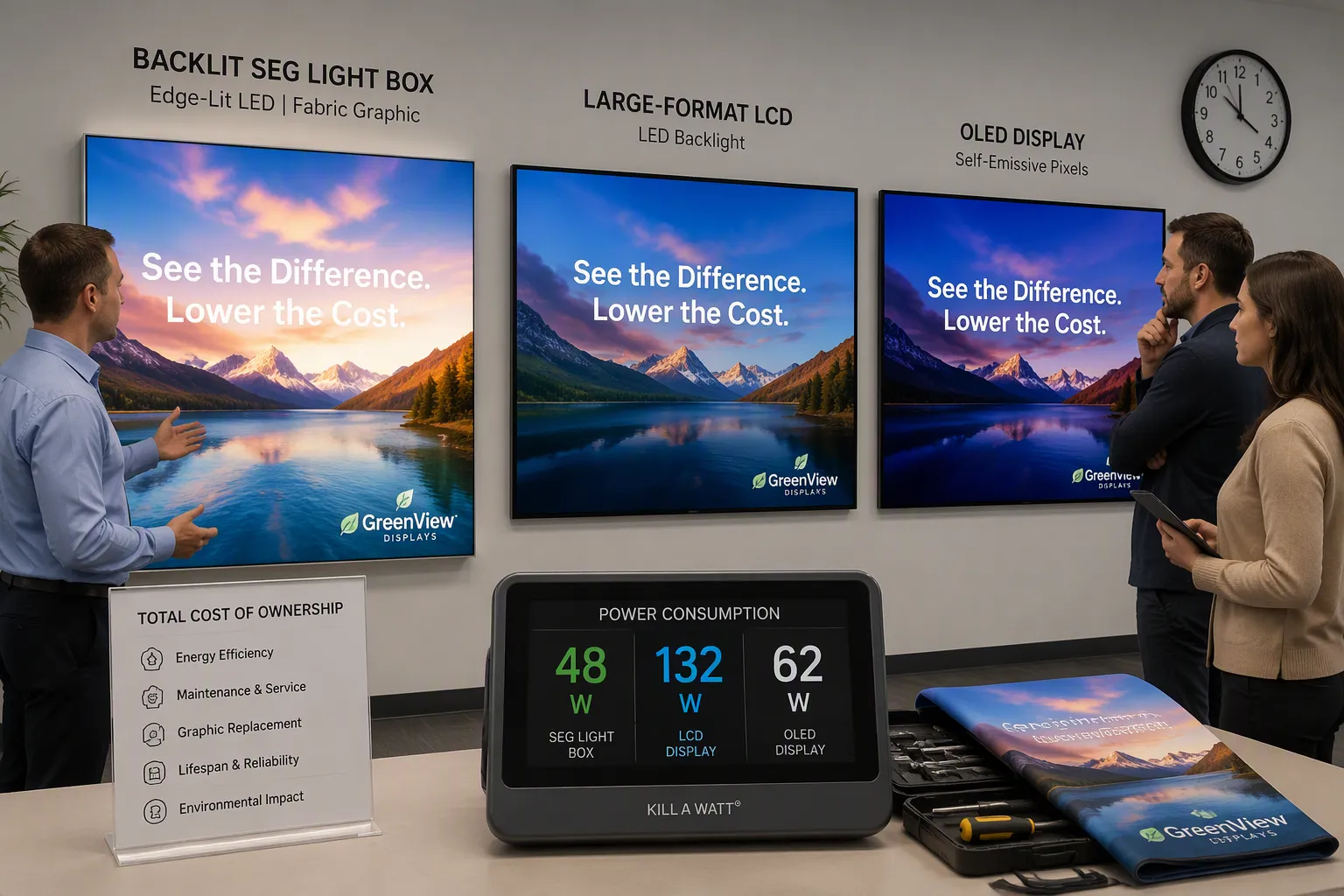
Buyers evaluating display options must compare total cost of ownership across multiple technologies. LCD screens, OLED panels, and traditional custom wood signage each carry distinct cost profiles. Silicone edge graphics systems occupy a unique, highly cost-effective position in this landscape.
Where Backlit SEG Light Boxes Win and Lose
Energy consumption varies significantly. LCD and OLED screens draw continuous power for every pixel and require expensive cooling systems in large formats. Backlit SEG light boxes use edge-lit LED strips that illuminate the entire graphic uniformly, drawing a fraction of the power.
Maintenance requirements differ substantially. LCD and OLED panels contain complex electronics prone to failure (dead pixels, control board issues). These repairs demand specialized AV technicians. SEG frames use simple mechanical components. A torn graphic costs $50 to replace; a cracked 85-inch LCD screen costs thousands and requires freight shipping.
Software and licensing create hidden costs for screen-based displays. Digital signage often requires $50-$200/month per screen in CMS (Content Management System) subscriptions. SEG displays need no software, no licenses, and no network connectivity, eliminating recurring IT expenses entirely.
The 5-Year TCO Matrix: SEG vs LCD vs Traditional
To understand the true ROI, buyers must look at the 5-year cost curve. The table below illustrates why premium buyers are shifting from traditional custom builds and LCD walls to modular SEG systems.
Cost Factor (5-Year) | Modular SEG Displays | LCD/LED Video Walls | Traditional Custom Booths |
|---|---|---|---|
Upfront Hardware | Medium ($$) | High ($$$) | High ($$$) |
Shipping & Drayage | Low (Flat-pack, lightweight) | High (Heavy, fragile, crates) | Very High (Bulky wood/metal) |
I&D Union Labor | Low (Tool-free, 1-2 hrs) | High (Specialized AV tech) | High (Carpentry tools) |
Content Updates | Low (Swap fabric only) | Medium (CMS software fees) | High (Rebuild/Reprint) |
Maintenance/Repair | Minimal (Modular parts) | High (Dead pixels, boards) | Medium (Paint/Scuffs) |
5-Year TCO Trend | Decreases over time | Increases (Maintenance) | High (Rebuilds every show) |
Across five years, SEG costs remain predictable. Hardware costs occur once. Graphic updates cost a fraction of new screens. Energy expenses stay low. The total cost of ownership heavily favors SEG for recurring display needs and multi-city trade show tours.
How Should Buyers Evaluate SEG TCO Before Purchasing?
Questions to Ask Vendors
Buyers should request wattage data for every illuminated frame to project energy costs. Ask for the I&D (Installation & Dismantle) time estimate to calculate union labor savings. Warranty terms deserve equal scrutiny; a longer warranty signals manufacturer confidence. Finally, ask about end-of-life recycling options to meet corporate ESG goals.
Anew Display offers OEM/ODM customization for structures, sizes, graphics, and accessories. Low minimum order quantities support project-based needs. A dedicated B2B service team provides detailed wattage reports and I&D manuals to help you calculate exact TCO before you buy.
The TCO Calculation Formula
Use this simple formula to build your internal procurement model:
5-Year TCO = Initial Hardware + (Shipping + Drayage) + (Labor Hours × Union Rate) + (Energy Cost × Lifespan) + (Graphic Swaps × Frequency) + Disposal
Setup time for most SEG configurations runs 15–20 minutes with two people. Frame lifespan reaches 150+ shows. Upfront prices range from $1,500 to $8,000+ for larger backlit configurations. One team swapped twelve SEG graphics in under two hours, eliminating thousands in reprinting and labor costs.
Energy draw, drayage fees, union labor, software licensing, and downtime shape the real price of any SEG display. The lowest purchase price rarely means the lowest total cost of ownership. Lifecycle math should drive the decision. Treat an SEG display purchase as a multi-year investment, not a one-time transaction.
Ready to optimize your exhibition budget? Contact Anew Display's B2B team today to request our Free SEG vs. Traditional Booth TCO Calculator (Excel) and get a custom 3D mockup for your next trade show. Stop overpaying for drayage and union labor—switch to modular efficiency.
FAQ
What is the typical lifespan of the LED strips in an SEG frame?
Quality edge-lit LED strips often last 50,000 hours or more. At 12 hours of daily use, this translates to roughly 11 years. Long lifespan minimizes replacement cycles and associated labor costs.
Which hidden cost is most commonly overlooked by first-time buyers?
Drayage (material handling fees) and union labor rates at North American trade shows are often underestimated. SEG's lightweight, flat-pack design drastically reduces these specific logistical expenses compared to heavy custom booths.
Can SEG frames be repaired if damaged? Or must they be replaced entirely?
Modular aluminum frames are easily repairable. Individual extrusions, corners, or LED strips can be swapped without discarding the entire structure. This modularity reduces long-term replacement expenses compared to monolithic LCD screens.
How does total cost of ownership change when graphics are updated frequently?
Frequent graphic updates heavily favor SEG displays. Replacing a silicone edge fabric graphic costs substantially less than printing adhesive vinyl, rebuilding a wood booth, or paying CMS software fees for digital screens.
What documentation should buyers request to verify vendor TCO claims?
Request wattage test reports, I&D time estimation guides, warranty terms covering parts and labor, and CE/RoHS certificates. Verified documentation protects against premature failures and unexpected service costs.
Please Contact Us!



Recent News
1.SEG vs Traditional Light Box: Key Differences & B2B Buying Guide
2026-09-212.How to Validate Trade Show Displays with Low-MOQ Orders
2026-09-163.OEM vs ODM: Which Model Fits Your Custom Light Box Business?
2026-09-184.Leading the trend of the times, detailing the seven advantages of modern digital exhibition hall design
2025-10-145.How to highlight the focus of the exhibition?
2025-10-14